

Swallowing is an act we often take for granted—until it becomes a struggle. If you find yourself chewing excessively, drinking large amounts of water to “push” food down, or feeling a painful blockage in your chest, you may be dealing with a medical condition known as Achalasia Cardia.
When it comes to treating delicate structures like the esophagus, experience is the most critical factor. Dr. Jayadatt Pawar, a highly acclaimed Advanced Laparoscopic, Bariatric & Robotic Surgeon in New Delhi, brings over 15+ years of experience to the table. Known for his precision and patient-centric approach, Dr. Pawar specializes in providing the most advanced Achalasia Cardia Treatment available today. Whether you are seeking a diagnosis or a secondary opinion for a complex case, his expertise ensures you are in the safest hands in the Delhi-NCR region.
What Is Achalasia Cardia?
To understand achalasia meaning, one must look at how the food pipe works. The esophagus is a muscular tube that connects your throat to your stomach. In a healthy person, the muscles coordinate in a wave-like motion—called peristalsis oesophagus—to move food downward. At the bottom of this tube sits the Lower Esophageal Sphincter (LES), a muscular valve that opens to let food into the stomach and closes to keep acid out.
Achalasia cardia (also referred to as achalasia cardiospasm or achalasia esophagus) occurs when two things go wrong:
- The nerves in the esophagus are damaged, stopping the muscle waves (peristalsis).
- The LES valve fails to relax and open.
Essentially, the food pipe becomes a “dead-end” street, causing food to sit, ferment, and eventually back up into the throat.
Types of Achalasia Cardia:
Medical science classifies this condition into three distinct types based on how the esophagus behaves during a pressure test (Manometry). Understanding your specific type is vital for successful Achalasia Cardia Treatment.

Classic Achalasia
There is almost no muscle activity in the esophagus. The pipe is often dilated (stretched out).
Achalasia
This is the most common variety. There is significant pressure build-up throughout the esophagus. Fortunately, type 2 achalasia (or achalasia type ii) usually responds the best to surgical intervention.
Spastic Achalasia
This involves abnormal, powerful contractions that cause intense chest pain. This type is more complex but can be managed effectively with specialized achalasia surgery.
Causes of Achalasia Cardia:
Many patients ask, “What is the achalasia cause?” While the exact reason why the nerves degrade is still being studied, the pathophysiology of achalasia involves a few key theories:
- Autoimmune Response: The body’s immune system mistakenly attacks the “Auerbach’s plexus,” the nerve network in the esophagus.
- Viral Infections: Some researchers suggest that a previous viral infection might trigger the nerve damage.
- Degeneration: General nerve loss that occurs over time, though it can affect people of all ages.
- Genetic Predisposition: In very rare cases, there may be a hereditary link.
Understanding the causes of achalasia helps doctors realize that this is a physical nerve issue, not a psychological “fear of swallowing.”
Symptoms of Achalasia Cardia:
The symptoms of achalasia cardia often start mildly and are frequently mistaken for simple acid reflux. However, as the condition progresses, the signs become undeniable:
- Dysphagia: Difficulty swallowing both solid food and liquids.
- Regurgitation: Undigested food coming back up into the mouth, especially when lying down.
- Chest Pain: A sharp or squeezing pain in the middle of the chest.
- Weight Loss: A significant drop in weight because eating becomes a chore.
- Heartburn: Caused by food rotting in the esophagus rather than stomach acid.
- Coughing and Choking: Often happens at night, which can lead to lung infections (aspiration pneumonia).
How to Diagnose Achalasia Cardia?
Before beginning Achalasia Cardia Treatment in New Delhi, Dr. Jayadatt Pawar conducts a thorough diagnostic workup.
- Achalasia Cardia Barium Swallow: You drink a contrast liquid while the achalasia radiology captures X-rays. In a positive case, the esophagus looks wide at the top and very narrow at the bottom—a classic “bird’s beak” appearance.
- High-Resolution Manometry: A thin tube measures the pressure of your esophageal muscles. This is the gold standard for identifying achalasia cardia meaning and type.
- Upper Endoscopy: A camera is used to look inside the esophagus to ensure there are no tumors or physical obstructions causing the symptoms.
Advanced Treatments for Achalasia Cardia by Dr. Jayadatt:
Today, an achalasia operation is no longer a “major open surgery” with long recovery times. Under the care of Dr. Pawar, you have access to:
1️⃣ Laparoscopic Heller Myotomy
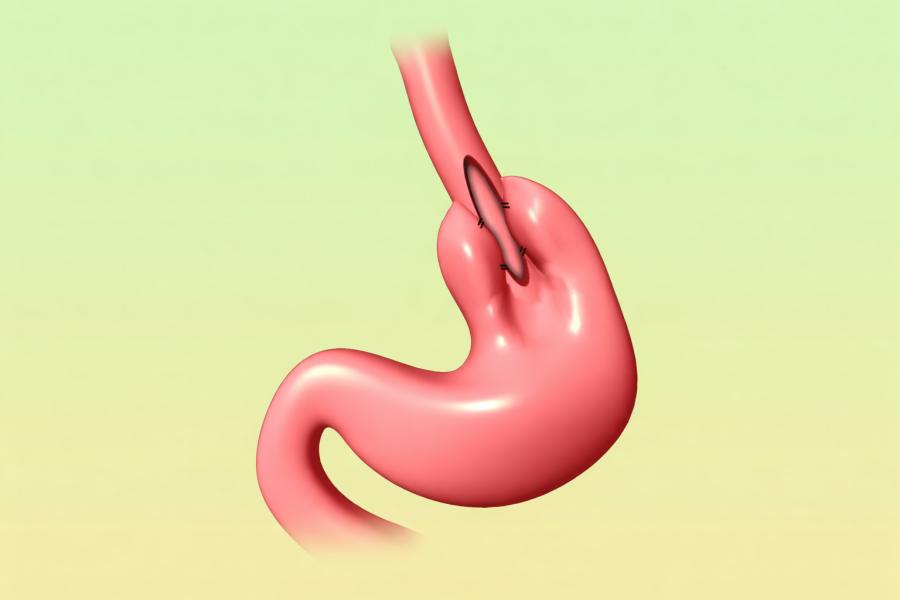
This is a minimally invasive achalasia surgery where the surgeon makes 5 small “keyhole” incisions. The tight muscles of the LES are cut (myotomy) to allow food to pass. This is often combined with a “Dor Fundoplication” to prevent acid reflux.
2️⃣ Robotic Achalasia Surgery
Using the Da Vinci Robotic System, Dr. Pawar performs the achalasia operation with 3D visualization and 360-degree instrument rotation. This is the pinnacle of Achalasia Cardia Treatment, offering the highest precision and fastest return to normal life.
3️⃣ POEM (Per-Oral Endoscopic Myotomy)
This is a “no-scar” procedure. The entire surgery is done through the mouth using an endoscope. It is highly effective for achalasia type 2 and Type 3.
4️⃣ Balloon Dilation
A less permanent achalasia cardia treatment where a balloon is inflated to stretch the LES. This is usually reserved for those who cannot undergo surgery.
Best Achalasia Cardia Treatment in New Delhi:
If you are looking for the Best Achalasia Cardia Treatment in New Delhi, Dr. Jayadatt Pawar’s clinic is a premier destination. New Delhi offers a unique combination of world-class medical infrastructure and highly skilled surgeons. Patients from across India and the globe travel here for Achalasia Cardia Treatment in Delhi because of the high success rates and the availability of robotic technology.
Who Is the Right Candidate for POEM Treatment?
POEM is a revolutionary treatment, but is it right for you?
- Ideal for patients who want to avoid any skin incisions.
- Excellent for achalasia type II and especially Type 3.
- A great option for patients where previous achalasia surgery has failed.
- Suitable for both young adults and elderly patients who are otherwise fit for anesthesia.
Success Rate of Achalasia Cardia Treatment:
When performed by an expert like Dr. Pawar, the success rate of a Heller Myotomy or POEM is between 90% to 95%. Most patients find that they can eat a nearly normal diet within weeks. The improvement in quality of life—being able to eat out with friends or sleep without coughing—is often described by patients as “life-changing.”
Diet and Lifestyle Management in Achalasia Cardia:
Even after a successful achalasia surgery in New Delhi, you must adopt healthy habits:
- The Liquid Phase: For the first 2 weeks post-surgery, you will be on a liquid/pureed diet.
- Chew Well: Your esophagus no longer “pushes” food, so gravity does the work. Chew every bite to a paste.
- Avoid “Sticky” Foods: Bread, pasta, and dry meat can sometimes still be tricky.
- Hydration: Always have a glass of water nearby when eating.
- Sleep Inclined: Use a wedge pillow to keep your head elevated and prevent reflux.
Preventing Complications After Achalasia Cardia Treatment:
The most common side effect after any achalasia cardia treatment is acid reflux. Because we have “loosened” the valve to let food down, it is also easier for acid to come up.
- Pawar often performs a partial wrap during surgery to prevent this.
- Regular follow-ups are necessary to ensure the esophagus isn’t becoming too “lax.”
- In some cases, long-term acidity medication may be prescribed as a lax lower esophageal sphincter treatment strategy.
When to Consult a Specialist for Achalasia Cardia?
Do not wait until you are unable to swallow water. You should consult Dr. Jayadatt Pawar if:
- You have persistent “heartburn” that doesn’t respond to antacids.
- You feel food “sticking” in your lower throat or chest.
- You have lost more than 5kg of weight without trying.
- You have been told you have “GERD,” but your symptoms are getting worse.
Cost of Achalasia Cardia Treatment in New Delhi:
The cost of Achalasia Cardia Treatment in New Delhi varies based on the approach. Laparoscopic surgery is the most cost-effective, while Robotic surgery and POEM involve higher technology costs. However, compared to international prices, Achalasia Cardia Treatment in Delhi provides incredible value, often costing 70% less than in the West for the same quality of care.
Best Hospital for Achalasia Cardia Treatment:
For patients seeking the highest standard of care, Dr. Jayadatt Pawar serves as an Advanced Laparoscopic, Bariatric & Robotic Surgeon at Amrita Hospitals in Faridabad. Choosing an expert with extensive experience ensures that your Achalasia Cardia Treatment is handled with the precision required for complex esophageal disorders.
Premier Centers for Excellence:
- Amrita Hospital, Faridabad: An iconic institution providing Top-Quality Healthcare in Faridabad. It is equipped with Asia’s most advanced robotic surgery suites and specialized gastro-physiology labs for manometry.
- Elysian Healthcare & Happy Gut Clinic, Greater Kailash, New Delhi: A specialized facility offering focused care for digestive health and advanced gastrointestinal consultations.
- Multidisciplinary Approach: Patients benefit from a team of specialized nutritionists and gastroenterologists working together to ensure a smooth recovery.
- His expertise in various gastrointestinal surgeries—ranging from life-saving cancer resections to complex achalasia surgery—makes him the preferred choice for patients seeking a permanent cure. By choosing a facility like Amrita or Elysian Healthcare, you ensure access to world-class technology and compassionate care all under one roof.
Request Call Back:
If you or a loved one is struggling with swallowing, don’t suffer in silence. Achalasia Cardia Treatment can restore your health and your happiness. Dr. Jayadatt Pawar and his team at Amrita Hospital are ready to help you navigate your journey to recovery.
Contact no: +91 84382 83406
FAQs: About Achalasia Cardia:
Achalasia cardia is a medical condition where your food pipe (esophagus) loses its ability to move food down into the stomach. The word “achalasia” specifically means “failure to relax.” In this condition, the muscular valve at the bottom of the food pipe stays shut, making it feel like food is “stuck” in your chest.
The function of the esophagus is to act as a transport tube. It uses a wave-like muscle motion called peristalsis to push food and liquids from your throat down to your stomach. In a healthy person, this process happens automatically and smoothly every time you swallow.
The esophagus sphincter (specifically the Lower Esophageal Sphincter or LES) acts like a gatekeeper. Normally, it opens when you swallow to let food pass into the stomach. In patients with achalasia, this “gate” becomes too tight and fails to open, causing food to pile up in the esophagus instead of entering the stomach.
The exact causes of esophageal achalasia are still being studied, but it usually happens because the nerves in the wall of the esophagus start to disappear or stop working. This nerve damage can be caused by:
- An autoimmune response (where the body attacks itself).
- Damage from a previous viral infection.
- General nerve degeneration over time.
Type 2 achalasia is the most common of the three types of this disorder. In this version, there is significant pressure build-up throughout the entire length of the food pipe. The good news is that type 2 achalasia usually responds very well to treatments like POEM or Heller’s Myotomy performed by experts like Dr. Jayadatt Pawar.