
Intro: Choledocholithiasis vs Cholelithiasis
If you or a loved one is dealing with gallbladder issues, you may hear complex medical terms like Cholelithiasis and Choledocholithiasis. While both involve gallstones, they are two different conditions affecting different parts of your body. Understanding the distinction is the first step toward getting the right treatment. Dr. Jayadatt Pawar, a highly experienced and specialized Laparoscopic & Robotic Surgeon in New Delhi, brings over 15+ years of surgical experience to patients dealing with these conditions. Dr. Pawar works as a Consultant Advanced Laparoscopic, Bariatric & Robotic Surgeon at Amrita Hospital at Faridabad, and Elysian Healthcare & Happy Gut Clinic at Greater Kailash, New Delhi, ensuring world-class care across the NCR region.
Let’s simplify the confusion between choledocholithiasis vs cholelithiasis.
What Are Gallstones?
Before we look at the difference between cholelithiasis and choledocholithiasis, we must understand what gallstones are. Gallstones are hardened deposits of digestive fluid that form inside your gallbladder.
Gallstones can be tiny, like a grain of sand, or as large as a golf ball. They form when there is an imbalance in the substances that make up your bile. Most people with gallstones don’t even know they have them—they are asymptomatic. Problems only start when these stones move and cause a blockage or inflammation.
What is Choledocholithiasis (Stones in the Common Bile Duct)?
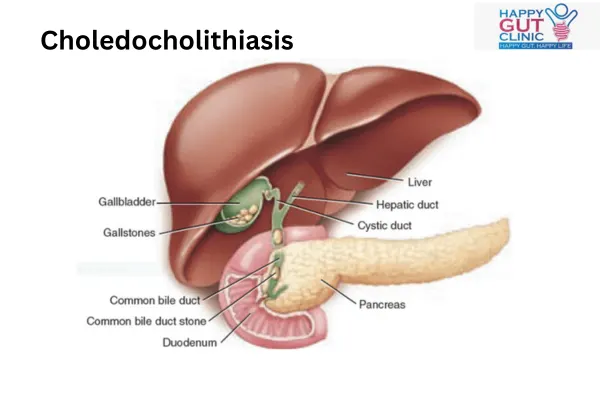
Choledocholithiasis definition or choledocholithiasis meaning in english refers to the presence of one or more gallstones in the Common Bile Duct (CBD). The CBD is the main pipe that carries bile from the liver and gallbladder down to the small intestine. Most cases of choledocholithiasis occur when a gallstone that formed in the gallbladder (Cholelithiasis) escapes and moves down to get stuck in the narrower CBD.
Choledocholithiasis signs and symptoms
Symptoms (Choledocholithiasis signs and symptoms): Because the stone is blocking the main drainage channel for bile, the symptoms are much more severe than simple Cholelithiasis. Choledocholithiasis signs and symptoms typically include:
- Jaundice: The most obvious sign is yellowing of the skin and eyes because bile is backing up into the bloodstream.
- Severe Upper Abdominal Pain: Continuous, intense pain in the upper abdomen.
- Fever and Chills: This is a serious sign of infection in the bile duct, called Cholangitis.
- Dark Urine and Pale/Clay-Coloured Stools: The bile that gives stool its brown colour cannot reach the intestine.
What is Cholelithiasis? (Gallstones in the Gallbladder):
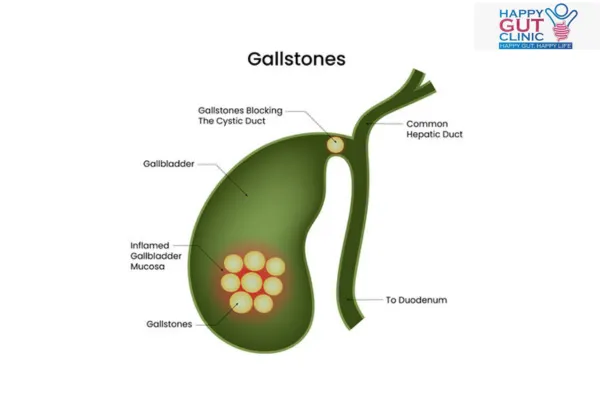
Cholelithiasis is the medical term for the presence of one or more gallstones in the gallbladder itself. The medical term is simply ‘gallstones’. You might also hear the term cholecystolithiasis vs cholelithiasis; these two terms mean exactly the same thing—stones in the gallbladder. Cholelithiasis vs cholecystolithiasis is just a matter of different medical nomenclature.
Cholelithiasis Symptoms
Symptoms (Cholelithiasis symptoms): Often, cholelithiasis without cholecystitis meaning means you have stones but no pain or inflammation. However, when a stone blocks the cystic duct (the small pipe leading out of the gallbladder), it causes pain called biliary colic.
The common cholelithiasis symptoms include:
- Biliary Colic: Sudden, intense pain in the upper right side of the abdomen. The pain can sometimes radiate to the back or the right shoulder blade.
- Nausea and Vomiting: Often occurring along with the pain, especially after eating fatty food.
- Indigestion: Feeling bloated or gassy after meals.
Complications: If a gallstone completely and persistently blocks the cystic duct, it can lead to complications. The most common complication is Acute Cholecystitis (inflammation/infection of the gallbladder). This is the key point in the cholelithiasis vs cholecystitis discussion: Cholelithiasis is having the stones; Cholecystitis is the inflammation/infection caused by the stone. Difference between cholelithiasis and cholecystitis is inflammation.
Why It's More Serious?
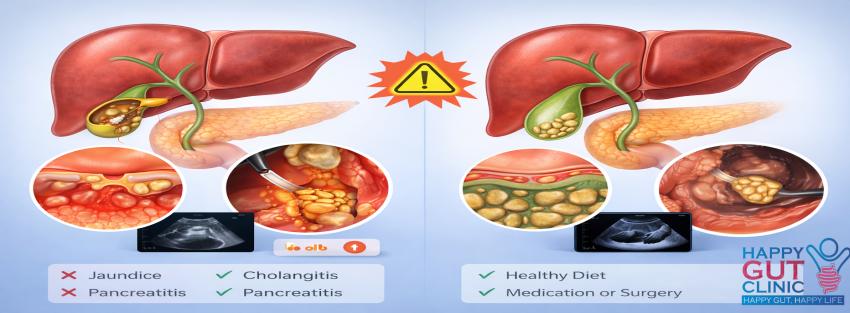
When you understand what is choledocholithiasis, you realize why it’s a medical emergency. A blocked CBD can lead to two very serious conditions:
- Cholangitis: A severe, life-threatening bacterial infection of the bile duct.
- Pancreatitis: The bile duct shares an opening with the pancreatic duct. If the stone blocks both, digestive enzymes back up into the pancreas, causing dangerous inflammation known as gallstone pancreatitis. These are the serious choledocholithiasis complications.
Key Differences Between Cholelithiasis and Choledocholithiasis:
The core difference between choledocholithiasis vs cholelithiasis is location.
- Cholelithiasis: Stones are located inside the Gallbladder. Often asymptomatic or causes intermittent pain (biliary colic).
- Choledocholithiasis: Stones are located inside the Common Bile Duct. Always considered serious due to the risk of life-threatening complications like jaundice and infection (Cholangitis/Pancreatitis).
The difference in symptoms is a key point in discussing choledocholithiasis vs cholelithiasis symptoms. While both can cause pain, only choledocholithiasis typically causes jaundice and fever. This is the main difference between cholelithiasis and choledocholithiasis. When a patient has both conditions, it is referred to as cholelithiasis with choledocholithiasis.
Diagnosis: How Doctors Identify Each Condition?
Accurate diagnosis is vital, especially when ruling out serious complications like Cholangitis or Pancreatitis (choledocholithiasis vs cholecystitis).
1. Blood Tests:
- Cholelithiasis (uncomplicated): Blood test results are usually normal.
- Choledocholithiasis: Liver function tests (like bilirubin, Alkaline Phosphatase) are often very high, indicating a blockage.
2. Imaging Tests:
- Ultrasound: This is the first and best test. It is highly effective at showing stones inside the gallbladder (Cholelithiasis). It can also sometimes show a stone in the CBD and/or show a dilated (swollen) CBD, which points to choledocholithiasis and cholelithiasis.
- MRCP (Magnetic Resonance Cholangiopancreatography): A specialized MRI scan that takes detailed pictures of the bile ducts. This is the best non-invasive way to confirm if a stone is present in the CBD (define choledocholithiasis).
- EUS (Endoscopic Ultrasound): A highly accurate test to find small stones in the CBD.
3. ERCP (Endoscopic Retrograde Cholangiopancreatography):
- This procedure is both diagnostic and often the first step in treatment for CBD stones.
Treatment of Cholelithiasis and Choledocholithiasis
The treatment approach for these two conditions is often sequential and carefully planned by a surgical expert like Dr. Jayadatt Pawar.
1. Cholelithiasis Treatment
For symptomatic gallstones causing pain, the definitive treatment of cholelithiasis is the surgical removal of the gallbladder.
- Laparoscopic Cholecystectomy: This is the gold standard for cholelithiasis treatment. It is a minimally invasive keyhole surgery to remove the gallbladder, resulting in small scars, less pain, and a very quick recovery time. Dr. Pawar is highly proficient in this treatment cholelithiasis procedure.
2. Treatment of Choledocholithiasis
Treatment for stones in the CBD is urgent because of the high risk of infection. While medical management of choledocholithiasis may involve antibiotics and pain relief to stabilize the patient, a procedure is usually necessary to clear the blockage.
- ERCP: This is the most common first-line treatment of choledocholithiasis. An endoscope is passed down the throat into the small intestine, and a tool is used to remove the stone from the CBD.
- Laparoscopic CBD Exploration: In some cases, especially when the gallbladder is removed at the same time, the stones can be removed from the CBD using laparoscopic tools during the same surgery. Dr. Pawar specializes in this combined approach to ensure comprehensive care.
Risks and Possible Complications:
While both conditions are treatable, ignoring them carries serious risks.
1. Risks of Cholelithiasis (Stones in the Gallbladder): Ignoring stones in the gallbladder can lead to severe inflammation.
- Primary Risk: The most common danger is Acute Cholecystitis. This is a painful inflammation and infection of the gallbladder caused by a stone blocking the outlet.
- Severe Complications: If left untreated, this can progress. The gallbladder may perforate (burst), leading to a severe, widespread infection called Sepsis. There is also the risk that a stone could move to the main duct, causing Gallstone Pancreatitis.
2. Risks of Choledocholithiasis (Stones in the Main Bile Duct): Because the stone is blocking the critical drainage pipe, the risks of choledocholithiasis complications are much higher.
- Primary Risk: The bile backs up, causing Jaundice (yellowing of skin/eyes) and the life-threatening infection known as Cholangitis (infection of the bile duct).
- Severe Complications: The most common severe outcome is Gallstone Pancreatitis. A stone blocking the bile duct can also block the pancreatic duct. This causes dangerous inflammation of the pancreas. Additionally, severe Cholangitis can lead to liver failure and Sepsis (blood infection). Ignoring these signs requires immediate medical help.
Recovery and Prognosis:
- Cholelithiasis (Laparoscopic Cholecystectomy): Recovery is usually quick. Most patients are discharged within 24-48 hours and return to normal activities within one week. The long-term prognosis is excellent, as the source of the stones (the gallbladder) is removed.
- Choledocholithiasis (ERCP/Surgery): Recovery depends on the severity of the initial blockage or infection. If Cholangitis or Pancreatitis has set in, recovery will be longer. Following successful stone removal, the patient almost always needs a follow-up Laparoscopic Cholecystectomy to prevent new stones from causing choledocholithiasis again.
Prevention Tips:
While you cannot always prevent gallstones, you can reduce your risk:
- Maintain a Healthy Weight: Avoid rapid weight loss or gain.
- Balanced Diet: Eat a high-fibre, low-fat diet.
- Stay Active: Regular exercise helps maintain a healthy bile balance.
Conclusion:
Understanding the difference between choledocholithiasis and cholelithiasis is vital. Cholelithiasis is the beginning, and choledocholithiasis is the more serious complication when a stone causes a critical blockage. If you experience persistent pain, jaundice, or fever, please seek expert surgical consultation immediately. Dr. Jayadatt Pawar and his team offer advanced laparoscopic and robotic solutions for both simple gallstones and complex common bile duct stones.
Trust a specialist with 15+ years of experience to guide you toward the Best treatment and a full recovery. Gallstone problems can turn serious quickly—early treatment makes all the difference. Book your consultation with Dr. Jayadatt Pawar for safe, advanced, and reliable care.
FAQs About Cholelithiasis and Choledocholithiasis
Gallstones can be dangerous if they lead to complications. While some stones remain “silent” and cause no issues, others can block the flow of bile, leading to:
- Infections: Such as cholecystitis (gallbladder inflammation) or cholangitis (bile duct infection).
- Jaundice: Yellowing of the eyes and skin due to bile blockage.
- Pancreatitis: A serious inflammation of the pancreas that requires urgent medical care.
Gallstones typically form when there is a chemical imbalance in the bile. This usually happens in three ways:
- Excess Cholesterol: If the bile contains too much cholesterol for the bile salts to dissolve, it can harden into stones.
- Excess Bilirubin: Certain conditions cause the liver to make too much bilirubin, which contributes to stone formation.
- Gallbladder Stasis: If the gallbladder doesn’t empty completely or often enough, the bile becomes very concentrated, leading to stones.
In medical terms, “calculi” simply means stones. Therefore, calculi in the gallbladder refers to the presence of gallstones (cholelithiasis). These are hard, pebble-like deposits that can range in size from a grain of sand to a golf ball.
When stones move out of the gallbladder and block the bile ducts, it often causes more noticeable symptoms. Watch for these signs:
- Dark Urine: Or clay-colored stools.
- Constant Jaundice: Yellowing of the skin or the whites of the eyes.
- Fever and Chills: This usually indicates a serious infection in the duct.
- Nausea and Vomiting: Accompanied by intense, steady pain in the center of the abdomen.
There are two primary gallstone types that patients typically develop:
- Cholesterol Stones: The most common type, usually yellow-green in color. They are primarily made of undissolved cholesterol.
- Pigment Stones: These are smaller, darker (black or brown) stones made of bilirubin. They are more common in patients with certain blood disorders or liver cirrhosis.