

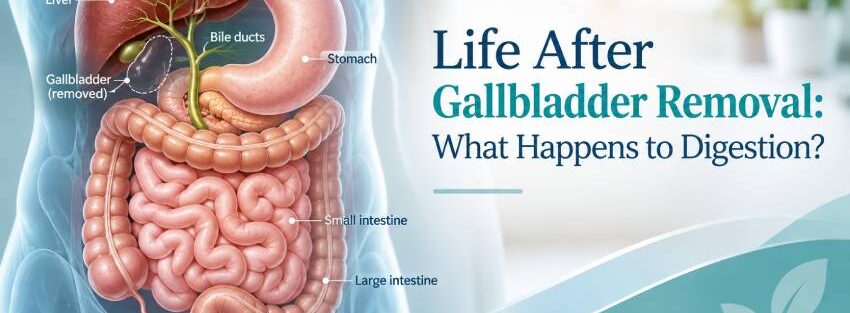
Gallbladder stone problems are very common in India today. Many people need surgery to remove the gallbladder. This surgery is called cholecystectomy. Once the doctor advises this surgery, most patients worry about one thing. “What will happen to my digestion after this?”
This worry is natural. But the good news is, your body adjusts well after gallbladder removal. You can live a normal, healthy life.
Dr. Jayadatt Pawar is a well-known GI Surgeon in New Delhi. He has completed 2,000+ GI surgeries, 300+ robotic surgeries. With 15+ years of experience, he has treated over 5,000 happy patients. His success ratio stands at 95%. In this blog, he explains, in simple words, what really happens to your digestion after gallbladder removal.
What Happens After Gallbladder Removal?
The gallbladder is a small, pear-shaped organ. It sits just below the liver. Its main job is to store bile. Bile is a fluid made by the liver. It helps in digesting fat.
When the gallbladder is removed, the liver still makes bile as usual. But there is no storage place anymore. So bile now flows directly from the liver into the small intestine, all day long, in small amounts.
This is a big change for your body. But it is not a dangerous change. Your digestive system slowly learns to work without the gallbladder. Most patients feel completely normal within a few weeks.
How Does Digestion Change After Gallbladder Removal?
Before surgery, your gallbladder used to store bile and release it in large amounts. This happened mainly after a heavy or fatty meal. This system worked like a “reserve tank” for fat digestion.
After surgery, this reserve tank is gone. Bile drips continuously into your intestine, in smaller quantities. This works well for small and medium meals. But if you eat a very heavy, oily meal, your body may struggle to digest it quickly.
That is why doctors recommend eating smaller meals, more often, instead of three large meals a day.
What Happens to Bile After Gallbladder Removal?
Bile does not stop being made. Your liver keeps producing it every day. Without the gallbladder, bile travels directly through the bile duct into the intestine.
This continuous bile flow is usually enough to digest normal, home-cooked food. Problems mostly happen with very oily, fried, or spicy food, especially in the first few weeks after surgery. Over time, your bile duct slightly widens and adjusts to handle bile flow better.
Common Digestive Changes After Gallbladder Surgery
Many patients notice small digestive changes after surgery. Common ones include:
- Mild bloating after meals
- Loose motions once in a while
- Extra gas formation
- Slight discomfort after fatty food
- A feeling of fullness quickly
These changes are common and usually mild. They reduce on their own as your body adjusts.
Foods to Eat After Gallbladder Removal:
Eating the right food speeds up recovery and reduces discomfort. Good food choices include:
- Fresh fruits like banana, papaya, and apple
- Boiled or lightly cooked vegetables
- Whole grains such as oats, dalia, and brown rice
- Lean protein like dal, moong, fish, and chicken
- Low-fat curd and milk
- Plenty of water through the day
Eating small meals, five to six times a day, is better than eating three heavy meals.
Foods to Avoid After Gallbladder Removal:
Some foods can cause bloating, gas, or loose motions after surgery. It is best to avoid or limit:
- Fried food like samosa, pakora, and puri
- Very spicy or oily curries
- Packaged and processed snacks
- Excess red meat
- Cold drinks and carbonated beverages
- Excess sweets and bakery items
You do not need to avoid these forever. But limiting them in the first few weeks helps your body heal faster.
How Long Does It Take to Adjust After Gallbladder Removal?
Every patient is different. Some feel completely normal within a week. Others take four to six weeks to adjust fully. On average, most people return to their normal diet and routine within one to two months.
Patience is important here. Your body is learning a new way to digest food. Give it time.
Diarrhea, Gas and Bloating After Gallbladder Surgery:
These three symptoms are the most common complaints after gallbladder removal. They happen because bile now flows continuously, and sometimes too much bile reaches the intestine at once. This can irritate the gut lining and speed up bowel movements.
To manage this:
- Eat fibre-rich food slowly, not all at once
- Avoid heavy, oily meals
- Stay hydrated
- Take probiotic curd to support gut bacteria
If diarrhea or bloating continues for more than a few months, it is important to consult your surgeon.
Tips for Better Digestion After Gallbladder Removal:
- Eat smaller meals, more frequently
- Chew your food slowly and properly
- Reduce oily and fried food gradually, not suddenly
- Drink at least 8 to 10 glasses of water daily
- Add fibre to your diet slowly, over a few weeks
- Walk for 20 to 30 minutes daily
- Avoid lying down immediately after meals
These small habits make a big difference in how quickly your digestion normalises.
When Should You See a Doctor After Gallbladder Removal?
Most symptoms after gallbladder surgery are mild and temporary. But some symptoms need immediate medical attention:
- Severe or worsening stomach pain
- Yellowing of the skin or eyes (jaundice)
- High fever with chills
- Continuous vomiting
- Diarrhea that does not improve for weeks
- Signs of infection near the surgery site
If you notice any of these, do not wait. Visit your surgeon immediately.
Why Choose Dr. Jayadatt Pawar for Gallbladder Surgery in New Delhi?
If you are looking for the Best Laparoscopic Surgeon in New Delhi, Dr. Jayadatt Pawar is a name many patients trust. He is also an experienced Robotic Surgeon, skilled in advanced, minimally invasive techniques for Gallbladder stone Treatment .
His educational journey is strong and detailed. He completed MBBS from SS Institute of Medical Sciences & Research Centre, Davanagere, followed by MS (General Surgery) from Rajiv Gandhi University of Health Sciences. He holds a DNB, FMAS from AMASI (2019), and FNB in Laparoscopic & Robotic Surgery from GEM Hospital, Coimbatore (2023). He has also completed FCRS, a Fellowship in Colorectal Surgery, from Hong Kong, and FALS in Bariatric Surgery. He is a certified da Vinci robotic surgeon as well.
As a respected HPB Surgeon and General Surgeon, his work has been recognised internationally. He won the Bursary Award at AMASICON 2022, was ranked 4th in the All India FET-2021, and was invited as guest faculty at AAPS Vietnam, CRSA Italy, and conferences in Seoul, South Korea. He has published more than 20 research papers in peer-reviewed journals and is a member of AMASI, IAGES, and ACRSI.
Patients choose him because he offers modern, minimally invasive surgery with faster recovery and personal, caring attention at every step.
Life After Gallbladder Surgery: Long-Term Expectations:
In the long term, gallbladder removal does not limit your life. Most patients:
- Eat a normal, balanced diet
- Exercise and travel without restrictions
- Maintain a stable weight
- Face no major digestive problems after the first few months
Some people remain slightly sensitive to very oily food for years, but this is manageable with simple diet care.
Conclusion: Living a Healthy Life After Gallbladder Removal
Gallbladder removal is a safe and common surgery. Your digestion does change slightly, but your body adapts well over time. With the right diet, healthy habits, and regular follow-up, you can lead a completely normal and active life.
If you have gallbladder stones or need expert surgical advice, consult Dr. Jayadatt Pawar, a trusted GI Surgeon, for safe, advanced, and patient-friendly treatment.
Frequently Asked Questions About Gallbladder Removal
Yes, mild loose motions are quite common in the first few weeks after surgery. This happens because bile now flows directly into the intestine instead of being stored and released in a controlled manner. As your digestive system adjusts to this new pattern, the frequency usually reduces on its own. Eating smaller meals and avoiding oily food can help speed up this adjustment.
It is best to avoid very spicy and oily food for the first few weeks after surgery. Your digestive system needs time to adapt to the continuous bile flow, and spicy food can irritate the gut during this period. You can slowly reintroduce spices in small amounts once your body feels settled. Always observe how your stomach reacts before increasing the quantity.
Most patients maintain a stable weight after gallbladder surgery, provided they follow a healthy and balanced diet. Some people may lose a little weight initially due to dietary changes and reduced fat intake. Over time, as digestion normalises, weight usually settles back to a steady level. Regular exercise and mindful eating help maintain a healthy weight in the long run.
Most patients return to their daily activities within one to two weeks after laparoscopic gallbladder surgery. Recovery time depends on the type of procedure performed and the patient’s overall health. Light activities like walking can usually start within a few days. Heavy lifting and strenuous exercise should be avoided until your surgeon gives clearance.
Yes, laparoscopic gallbladder surgery is a safe, well-established, and widely performed procedure across India. It involves small incisions, less pain, and a much faster recovery compared to open surgery. When performed by an experienced surgeon like Dr. Jayadatt Pawar, the risk of complications is very low. Most patients are discharged within a day or two after the procedure.
No, once the gallbladder is completely removed, stones cannot form in that space again. However, in rare cases, small stones may remain in the bile duct and need separate treatment. Maintaining good digestive habits and a balanced diet supports overall gut health after surgery. Regular follow-up with your surgeon helps catch any issues early.
Dr. Jayadatt Pawar is a highly experienced GI Surgeon in New Delhi with over 15 years of practice in gastrointestinal and laparoscopic surgery. He has successfully performed 2,000+ GI surgeries, including a large number of gallbladder procedures, with a 95% success ratio. He holds advanced fellowships, including FNB in Laparoscopic & Robotic Surgery from GEM Hospital, Coimbatore, and FCRS in Colorectal Surgery from Hong Kong. His combination of international training and hands-on experience makes him a trusted choice for safe gallbladder treatment.