
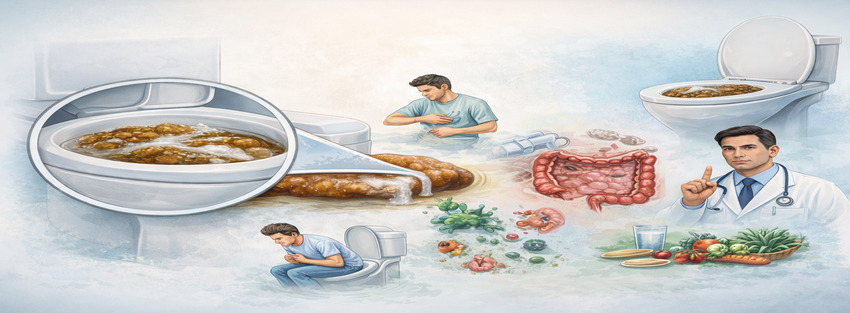
Seeing white mucus in stool or mucous stools can be alarming. It often looks like clear, white, or jelly-like poop or phlegm-like stool. While mucus is a normal part of your body, seeing too much of it means your digestive system is sending you a clear message. It’s important to understand what this white mucus in the stool means.
Dr. Jayadatt Pawar, a leading GI expert and Laparoscopic & Robotic Surgeon in New Delhi, has extensive experience treating these gut issues. His goal is to find the true cause of mucus in stool to give you lasting relief.
Understanding Mucous Stools – Expert Insights by Dr. Jayadatta Pawar
Dr. Jayadatt Pawar is here to help you understand your symptoms. As a specialist in treating complex GI issues, he knows that stools with white mucus are often a symptom, not the problem itself. He focuses on diagnosing the root cause of the mucus with stool to ensure you get the right care. Early consultation can prevent minor issues from becoming serious gut problems.
What Is Mucus in Stool?
Mucus is a normal, jelly-like substance made by the lining of your intestines. Think of it as a natural lubricant.
- Role of Mucus: This slimy layer protects the walls of your colon. It keeps the lining moist and helps stool pass smoothly.
- Normal vs. Abnormal: Normally, you don’t notice it in your poop and mucus. If you see stools with excess mucus, it means your body is producing too much or there is swelling in the gut lining.
Normal vs Abnormal Mucus in Poop: When You Should Be Concerned?
Seeing a tiny bit of clear, jelly-like mucus from the anus is usually fine. It means your gut is just lubricating itself.
However, you should be concerned if you notice:
- Large Amounts: Seeing thick, white mucus in poop frequently.
- Colour Changes: Mucus that is green (green mucus in stool), yellow (yellow mucus in stool), or black (black mucus in stool).
- Blood: If you see faeces with blood and mucus (or mucus blood in stool), this is a serious sign.
- Pus: Seeing pus in stool or pus with stool means there is a clear infection.
- Other Symptoms: The mucus comes with severe pain, fever, or ongoing slimy diarrhea.
Common Causes of White Mucus in Stool:
When you ask, “Why mucus in stool?”, the answer often falls into three groups:
Digestive Irritation: This is the most common reason for mucus in motion and is usually temporary.
- Constipation: When stool is hard and dry (stringy stool), the intestines make extra mucus to help it pass. You might see a clear, slimy coating on the stool.
- Diet: Eating foods you are sensitive to (like dairy or processed food) can irritate the gut lining, causing mucous stools.
- Minor Infections: A simple stomach bug can cause temporary diarrhoea with mucus.
Gastrointestinal Disorders (IBS, IBD, Infections): These are long-term issues that cause inflammation, leading to more mucus production.
- Irritable Bowel Syndrome (IBS): This condition often causes loose stools with mucus. Patients may feel an urge to poop, but only mucus comes out. The mucus is usually clear or white.
- Inflammatory Bowel Disease (IBD): Conditions like Crohn’s disease or Ulcerative Colitis are serious. They cause the gut lining to swell and bleed. Seeing ulcerative colitis white mucus in stool or slimy and bloody stool is a key sign of active disease.
- Bacterial Infection: Infections (like Salmonella) can cause mucus-like stool that is often yellow or green.
Serious Underlying Conditions: In rare but serious cases, persistent white mucus in human stool or poop with mucus can point to more significant issues that Dr. Jayadatt Pawar must investigate.
Symptoms That Often Accompany Mucus in Stool:
When the stool with mucus is a problem, it often comes with other signs that your body is struggling:
- Pain: Cramping or sharp pain in the abdomen.
- Diarrhoea: Frequent, watery bowel movements (mucous diarrhoea).
- Blood: Any blood in stool, mucus (or mucus with blood in stool) must be checked immediately. This is never normal.
- Weight Loss: Losing weight without trying, along with stool mucus, is a red flag.
- Feeling of Incomplete Emptying: Feeling like you still need to go after a bowel movement (potty me mucus aana).
When to Consult Dr. Jayadatta Pawar for Mucous Stools?
Do not rely on mucus in stool home remedies. If you see any of the following, you must consult an expert like Dr. Jayadatt Pawar:
- Persistence: Mucus in the stool lasts for more than a week.
- Blood: Any sign of blood in stool with mucus or poop, blood and mucus.
- Colour: Mucus that is yellow, green, or black.
- Severe Symptoms: High fever, persistent vomiting, or rapid weight loss.
- Pus: Seeing pus in stool.
Dr. Pawar, a top specialist, will provide the accurate diagnosis you need.
How Dr. Jayadatta Pawar Diagnoses Mucus-Related Gut Issues?
Dr. Pawar focuses on identifying the exact reasons for mucus in stool. His approach is thorough:
- Full History: He will ask about your diet, travel, pain patterns, and the appearance of the stools with white mucus.
- Stool Tests: This is crucial. A lab will check the stool mucus for signs of infection (bacteria, parasites), inflammation, or blood. This tells Dr. Pawar if pus in stool is present.
- Endoscopy/Colonoscopy: If IBD or polyps are suspected, Dr. Pawar may perform a colonoscopy. This procedure uses a tiny camera to look directly at the lining of the large intestine. He can take small tissue samples (biopsies) to check for conditions like ulcerative colitis and white mucus in stool.
Treatment Options Offered by Dr. Jayadatta Pawar:
The treatment always targets the cause. Dr. Jayadatt Pawar ensures all necessary care is available. He owns the Best Gut Clinic in New Delhi – Happy Gut Clinic, where you can access comprehensive treatment.
- Infections: If bacteria or parasites are found, the treatment is specific antibiotics (medicine for mucus in stool) to clear the infection.
- IBS: Treatment focuses on diet changes, stress management, and a specific tablet for mucus in stool that helps control muscle spasms in the gut. These conservative treatments are readily available at the Happy Gut Clinic.
- IBD (Ulcerative Colitis/Crohn’s): This requires long-term medication to control the severe inflammation. Management and monitoring for IBD are key services offered.
- Structural Issues: In rare cases, if a polyp or tumor is the cause, Dr. Pawar uses his expertise as a Laparoscopic & Robotic Surgeon for precise removal, utilizing the advanced hospital setting when needed. All initial assessment and follow-up care for these surgical cases are managed through his clinic.
Tips to Improve Digestive Health and Reduce Mucus in Stool:
While waiting for your appointment, you can improve your gut health by following these tips:
- Increase Fiber: Eat more fruits, vegetables, and whole grains. This helps prevent constipation.
- Hydration: Drink plenty of water throughout the day.
- Probiotics: Include curd or other probiotic foods to keep your gut bacteria healthy.
Conclusion: Early Consultation with Dr. Jayadatta Pawar Can Prevent Serious Gut Problems
Never ignore persistent changes in your bowel habits, especially seeing white mucus in poop or stool. This is your body asking for help.
Dr. Jayadatt Pawar has the expertise to correctly diagnose the most serious causes (like IBD) and the most common ones (like IBS). Early diagnosis and professional stool with mucus treatment can prevent long-term complications and give you a better quality of life.
FAQ: About Stool with Mucus
Mucus is a jelly-like, slippery substance produced by the lining of your intestines.
- Simple Hindi: Mucus ek chipchipa padarth hota hai jo hamari anto (intestines) ki deewaron ko chikna banaye rakhta hai. It acts as a lubricant to help poop pass smoothly and protects the gut lining.
A tiny amount of clear or white mucus is usually normal and often goes unnoticed. However, if you see large amounts of mucus regularly, or if it is accompanied by pain or blood, it is not normal and you should consult a specialist like Dr. Jayadatt Pawar.
Your body produces extra mucus when the lining of the intestines is irritated. This can happen due to:
Constipation: The gut makes extra “lube” to help hard poop move.
Infections: Bacteria or viruses irritating the gut.
Inflammation: Conditions like IBS or IBD (Ulcerative Colitis).
Apart from IBS, white mucus often occurs when there is a food sensitivity (like dairy or gluten) or when the colon is slightly inflamed. It is the body’s way of trying to protect the intestinal wall from irritation.
Blood mixed with mucus indicates that the lining of your colon is not just irritated but also damaged or broken.
Causes: Common causes include Ulcerative Colitis, Crohn’s Disease, severe infections (Dysentery), or sometimes piles (hemorrhoids) and fissures.
Yes, it can be. While it might be something treatable like piles, blood and mucus can also be a sign of serious Inflammatory Bowel Disease (IBD) or, in rare cases, colorectal polyps or cancer. You should never ignore this; early diagnosis by a GI expert is essential.
They appear when there is active inflammation or an injury in the digestive tract. The mucus is produced because of irritation, and the blood comes from small sores (ulcers) or broken blood vessels in the gut lining.
The “meaning” is that your gut is sending a signal. It is a sign of inflammation, infection, or irritation. Think of it as a “check engine” light for your digestive system.
While you should always get a professional diagnosis, you can try these to soothe your gut:
- Stay Hydrated: Drink 8-10 glasses of water.
- Probiotics: Eat fresh curd (dahi) or buttermilk (chaas) to improve gut bacteria.
- Fiber Balance: Eat more fruits and veggies if you have constipation, but avoid heavy spices and oily food.
- Note: If symptoms last more than a week, “Gharelu nuskhe” (home remedies) are not enough; you need a doctor.
Seeing bright red blood in your stool can be very worrying, but it usually means the bleeding is coming from the lower part of your digestive tract (like the colon or rectum). According to Dr. Jayadatt Pawar, common causes include:
- Piles (Hemorrhoids): Swollen blood vessels in the rectal area.
- Anal Fissures: Small tears in the skin around the anus, often caused by constipation.
- Infections or Inflammation: Conditions like Ulcerative Colitis or Crohn’s disease.
- Other Issues: Sometimes, it can be a sign of polyps or more serious gut problems.
Dr. Jayadatt Pawar advises that you should never ignore blood in your stool, even if it doesn’t hurt. It is your body’s way of saying something is wrong.
If you see blood in your stool, you should consult a Gastrointestinal (GI) Surgeon or a Proctologist.
Dr. Jayadatt Pawar is a leading expert in this field. He is a highly experienced Laparoscopic and Robotic GI Surgeon who specializes in treating digestive tract issues. Consulting a specialist like Dr. Pawar ensures you get an accurate diagnosis through tests like a physical exam or a colonoscopy to find the exact cause of the bleeding.
You should consult a specialist who understands “Happy Gut” health and surgical interventions for the digestive system.
Dr. Jayadatt Pawar at the Happy Gut Clinic is the right expert to see. He focuses on finding the root cause of the problem—whether it is a simple issue like a fissure or a more complex condition like IBD or Colorectal issues.