

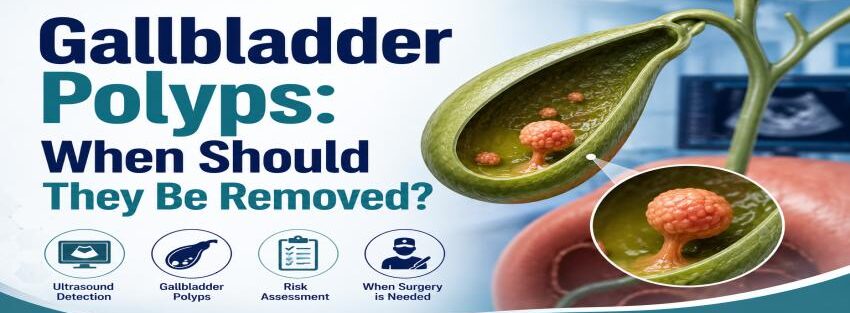
Gallbladder polyps are small growths inside the gallbladder wall. Most people do not even know they have one. These polyps are usually found by accident, during a routine ultrasound. But once detected, many patients start worrying. Should it be removed? Is it cancerous? Will it go away on its own?
Dr. Jayadatt Pawar is a highly experienced HPB Surgeon in New Delhi, with 15+ years of experience in gastrointestinal and bariatric surgery. He has completed 2,000+ GI surgeries, treated 5,000+ happy patients, and maintains a 95% success ratio in his surgical outcomes. In this blog, he explains everything you need to know about gallbladder polyps.
What Are Gallbladder Polyps?
Gallbladder polyps are small growths that stick out from the inner lining of the gallbladder. They can be tiny, like a few millimetres, or they can grow larger over time. Most polyps are harmless. But a few can turn cancerous, especially the bigger ones.
Types of Gallbladder Polyps:
There are mainly two types:
- Non-neoplastic polyps – These are the most common. They include cholesterol polyps, which form due to fat deposits. They are almost always benign.
- Neoplastic polyps – These are less common but more serious. They include adenomas, which have a chance of becoming cancerous over time.
Knowing the type helps in deciding the right treatment plan.
What Causes Gallbladder Polyps?
Doctors are still not 100% sure why gallbladder polyps form. In most cases, they appear because cholesterol or calcium starts collecting inside the gallbladder wall over time. Long-standing inflammation of the gallbladder is another common reason. Sometimes, a change in the composition of bile also triggers polyp growth. A few cases are connected to family history or other underlying gallbladder problems. Along with these causes, certain health conditions and habits can raise your chances of getting a polyp.
Risk Factors:
Your chances of developing a gallbladder polyp go up if you already suffer from:
- Bile duct infection or inflammation (cholangitis)
- Gallbladder inflammation or swelling (cholecystitis)
- An inherited disorder called familial adenomatous polyposis (FAP), which causes multiple polyps
- Gallstones
- Hepatitis B
- Elevated cholesterol levels
- Peutz-Jeghers syndrome, an uncommon genetic condition
- Primary sclerosing cholangitis (PSC), a long-term bile duct disorder
- Obesity or metabolic syndrome
Growing older, particularly crossing 50 years of age, also adds to the risk.
Apart from developing a polyp, some factors make it more likely for that polyp to turn cancerous instead of staying harmless:
- Crossing 60 years of age
- Belonging to Asian ethnicity
- Having primary sclerosing cholangitis (PSC)
- The polyp measuring more than 10 mm
- Having just a single polyp, rather than several small ones
- The polyp having a flat, broad base (called sessile shape)
Doctors also watch out for thickening of the gallbladder wall on ultrasound, as this can signal a higher cancer risk. If any of these apply to you, do not skip your regular scans and follow-up visits.
What Are the Symptoms of Gallbladder Polyps?
Most gallbladder polyps do not cause any symptoms. That is why they are called a “silent” condition. However, some patients do report:
- Pain in the upper right side of the abdomen
- Nausea or vomiting
- Bloating after meals
- Discomfort after eating fatty food
If you notice these symptoms, do not ignore them. Early diagnosis makes treatment much easier.
How Are Gallbladder Polyps Diagnosed?
Gallbladder polyps are usually found during an abdominal ultrasound done for some other reason. Once found, your surgeon may suggest:
- Ultrasound (to check size and number)
- CT scan (for detailed imaging)
- Endoscopic ultrasound (for closer view)
- Blood tests (to check liver and gallbladder function)
Regular monitoring is important, even if the polyp looks harmless at first.
When Should Gallbladder Polyps Be Removed?
This is the most common question patients ask. In simple words, gallbladder polyps require surgical removal, called cholecystectomy, in the following situations:
- If the polyp size is 10 mm (1 cm) or more, because the risk of cancer increases with size.
- If the polyp is growing fast, that is, 2 mm or more per year.
- If the polyp is causing symptoms, like severe pain in the upper abdomen.
- If the patient also has gallstones along with polyps.
- If the patient is above 50 years of age, since risk of malignancy is higher.
If the polyp is small, less than 6 mm, and there are no symptoms, your surgeon may simply advise regular monitoring instead of surgery.
How Are Gallbladder Polyps Treated?
Treatment of gallbladder polyps depends mainly on their size, growth rate, and symptoms. Here is a simple table to understand the approach better:
As you can see, small and stable polyps usually just need watching. But once size, growth, symptoms, or age raise the risk, surgery becomes the safer choice.
Treatment Options for Gallbladder Polyps:
Treatment depends on the size, symptoms, and risk factors.
- Watchful waiting – For small, symptom-free polyps, regular ultrasound monitoring every 6 to 12 months is enough.
- Laparoscopic Cholecystectomy – This is the standard surgery for removing the gallbladder. It is minimally invasive, with small cuts and quick recovery.
- Robotic Cholecystectomy – For complex cases, robotic surgery offers more precision and faster healing.
As a trusted Best Laparoscopic Surgeon in New Delhi and Robotic Surgeon in New Delhi, Dr. Jayadatt Pawar uses advanced, minimally invasive techniques to ensure safe and effective treatment.
Recovery After Gallbladder Surgery:
Recovery after laparoscopic or robotic cholecystectomy is usually smooth. Most patients can expect:
- Hospital stay of 1 to 2 days
- Return to normal activities within a week
- Mild dietary changes for a few weeks
- Very minimal scarring
Your surgeon will guide you on diet and activity to ensure a comfortable recovery.
When Should You Consult a GI Surgeon?
You should not wait for symptoms to become severe. Consult a GI Surgeon in New Delhi if you experience:
- Persistent upper abdominal pain
- A gallbladder polyp detected on ultrasound
- A polyp that is growing in size
- Family history of gallbladder or GI cancers
Early consultation helps in choosing the safest and simplest treatment path.
Why Choose Dr. Jayadatt Pawar for Gallbladder Treatment?
Dr. Jayadatt Pawar is a well-known HPB Surgeon in New Delhi, offering complete care for gallbladder, liver, and pancreatic conditions. His qualifications include MBBS, MS (General Surgery), DNB, FMAS from AMASI, FNB (Laparoscopic & Robotic Surgery) from GEM Hospital, Coimbatore, FALS (Bariatric Surgery), and FCRS (Fellowship in Colorectal Surgery) from Hong Kong.
He has been honoured with the Bursary Award at AMASICON 2022, invited as guest faculty at international conferences such as AAPS Vietnam, CRSA Italy, and events in Seoul, South Korea, and has published over 20 research papers in peer-reviewed journals.
Patients trust him for Gallbladder Stone Treatment in New Delhi, hernia, colorectal, and bariatric surgeries. With 300+ robotic surgeries and 100+ bariatric procedures to his credit, he brings both skill and compassion to every consultation.
Conclusion:
Gallbladder polyps are common, and most of them are harmless. But size, growth rate, and symptoms decide whether surgery is needed. Regular monitoring and timely consultation with an experienced GI surgeon can prevent complications and give you peace of mind.
If you have been diagnosed with a gallbladder polyp, do not delay your check-up. You can visit Dr. Jayadatt Pawar at Happy Gut Clinic, Greater Kailash-1, New Delhi 110048, For appointments, simply call 8438283406, available round the clock, or write to drjayadattpawar12@gmail.com. You can also check full details and book online . A small step today can save you from bigger trouble tomorrow, so do not wait, get your gallbladder checked in time.
FAQ:
Not always. Small polyps without symptoms can simply be monitored. Removal is needed only if the polyp is large, growing fast, or causing symptoms.
High-fat, fried, and cholesterol-rich foods may worsen gallbladder health. A balanced, low-fat diet is always recommended.
Cholesterol polyps sometimes shrink or stay the same. But true polyps, like adenomas, usually do not disappear on their own.
Growth rate varies. A growth of 2 mm or more per year is considered fast and may need surgical removal.
Yes, in rare cases, especially if the polyp is large, above 50 years of age, or growing quickly. This is why regular monitoring is important.
Polyps of 10 mm (1 cm) or more are considered high risk and are usually recommended for surgical removal.