

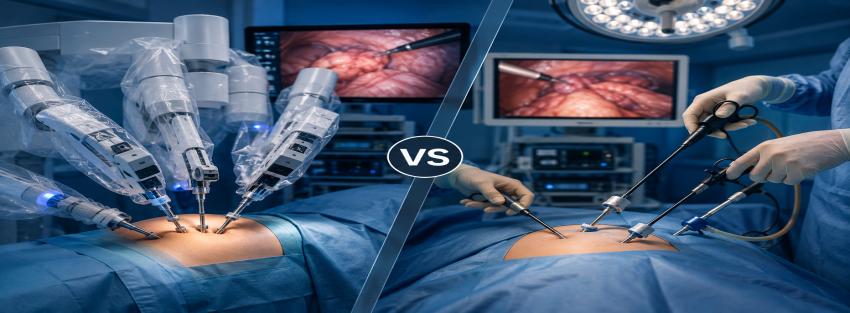
A hernia can give you pain. It can also give you stress and worry. Many patients ask one question. Which surgery is better? Robotic or laparoscopic? This is a very common question.
Dr. Jayadatt Pawar is a well-known GI Surgeon in New Delhi. He has 15+ years of experience in gastrointestinal and hernia surgery. He has successfully done 2,000+ GI surgeries. He has treated 5,000+ happy patients with care and honesty. His success rate stands at 95%, which shows his skill and consistency. He is known as one of the Best Laparoscopic Surgeons in New Delhi. He is also a trained and experienced Robotic Surgeon in New Delhi.
In this blog, we will explain both surgeries in detail. We will use simple words and short sentences. Our aim is to help you understand each option clearly, so that you can make an informed decision along with your doctor.
What Is Hernia Surgery?
A hernia happens when an internal organ or fatty tissue pushes through a weak spot in the muscle wall. This creates a bulge that you can often see or feel. It can happen in the groin area. It can also happen near the belly button. Sometimes it happens in the upper stomach region too.
A hernia does not heal on its own. It can slowly get bigger with time. In some cases, it can also get stuck, which becomes a medical emergency. This is why doctors always recommend timely surgery. Surgery is the only permanent solution for a hernia, and delaying it can increase risk.
What Is Laparoscopic Hernia Surgery?
Laparoscopic hernia surgery is also called keyhole surgery. In this method, the doctor makes 3 to 4 small cuts on the belly. A thin tube with a camera goes inside through one cut. Small surgical tools go inside through the other cuts.
The doctor watches everything on a big screen during the surgery. He repairs the weak area and places a mesh to support the muscle. This surgery causes much less pain than open surgery. It also leaves very small scars, which heal fast.
What Is Robotic Hernia Surgery?
Robotic hernia surgery is a more advanced form of keyhole surgery. In this method, a robotic system is used along with the surgeon’s skill. The doctor sits at a special console near the operation table. He controls the robotic arms with his own hands.
The robot does not operate on its own. It simply follows the doctor’s exact movements with more accuracy. The robotic arms can bend and rotate like a human wrist. This gives better reach in tight and difficult spots inside the body. The robot also gives a magnified 3D view, which shows every tissue layer very clearly.
Difference Between Robotic and Laparoscopic Hernia Surgery:
Both surgeries are minimally invasive, which means small cuts and less pain. But there are some real differences between them. Here is a simple table to help you understand it better:
This table shows that both techniques have their own strong points. The right choice depends on your hernia type and your surgeon’s advice.
When Is Robotic Hernia Surgery a Better Option?
Robotic hernia surgery works especially well for:
- Large hernias that need careful repair
- Complex hernias with unusual shape or size
- Recurrent hernias, meaning a hernia that has come back after old surgery
- Hernias close to important nerves or blood vessels
- Cases where the mesh needs very precise and secure placement
In these situations, the extra precision of robotic surgery can really make a difference in long-term results.
Who Can Benefit Most from Robotic Hernia Surgery?
Some patients get more real benefit from robotic surgery. This includes people who have more than one hernia at the same time. It also includes patients with higher body weight, where deeper tissue layers are harder to reach. Patients whose hernia has returned after old surgery also benefit greatly, since robotic precision reduces the chance of it happening again.
Benefits of Robotic Hernia Surgery:
- Better precision during surgery
- Clear, magnified 3D view of internal tissues
- Less damage to surrounding healthy tissue
- Well suited for complex or repeat hernias
- Lower risk of injury to nearby nerves
- Comfortable and steady hand control for the surgeon
When Is Laparoscopic Hernia Surgery the Right Choice?
Laparoscopic surgery works very well for small and simple hernias. It is a strong and reliable option for patients who want a quicker procedure with proven, long-term success. This method has been used safely for many years across the world. For a routine, uncomplicated hernia, laparoscopic surgery gives excellent and lasting results at a lower cost.
Benefits of Laparoscopic Hernia Surgery:
- Shorter surgery time in simple cases
- Small cuts that heal into small scars
- Quick return to normal daily life
- More cost-effective for most patients
- A trusted, well-tested technique used worldwide
Are the Recovery Times Different?
Both surgeries offer much faster recovery compared to open surgery. Patients who undergo laparoscopic surgery can often start light activities within just a few days. Patients who undergo robotic surgery also recover quickly. This benefit is more visible in complex cases, where fewer complications happen because of the precision involved. In both cases, following the doctor’s advice properly plays a big role in smooth healing.
Is Robotic Hernia Surgery More Expensive?
Yes, robotic hernia surgery generally costs more than laparoscopic surgery. This is because robotic machines and their maintenance are expensive. However, for complex or repeat hernia cases, this extra cost can actually save money in the long run. This is because it lowers the risk of complications and the need for a repeat surgery later.
Is Robotic Hernia Surgery Safe?
Yes, robotic hernia surgery is very safe when done by a well-trained and experienced surgeon. The technology has been used successfully for many years across the world, including in India. Dr. Jayadatt Pawar is an accredited da Vinci robotic surgeon. He has performed 300+ robotic surgeries with excellent and safe outcomes, giving patients confidence and peace of mind.
How Does Your Surgeon Choose the Best Technique?
Your surgeon carefully studies your hernia’s size, shape, and exact location. He also checks your overall health, weight, and any previous surgeries you may have had. Based on all these factors, he plans the safest and most suitable technique for you.
Dr. Jayadatt Pawar brings strong and wide training for exactly this kind of decision-making. He holds FMAS from AMASI (2019), showing his skill in advanced laparoscopic surgery. He also holds FNB in Laparoscopic & Robotic Surgery from GEM Hospital, Coimbatore (2023), which reflects his specialised robotic training. In addition, he has completed a special FCRS (Fellowship in Colorectal Surgery) from Hong Kong, adding further depth to his surgical expertise. This wide, international training helps him choose the most effective and safest surgery for every single patient.
Tips for Faster Recovery After Hernia Surgery:
- Follow your surgeon’s diet plan carefully
- Avoid lifting heavy things too soon after surgery
- Walk daily, as advised by your doctor
- Keep the surgical wound clean and dry at all times
- Attend all follow-up visits without skipping
- Wear a support belt, if your doctor recommends one
- Avoid smoking, as it can slow down healing
Conclusion:
Both robotic and laparoscopic hernia surgeries are safe, modern, and effective options. The right choice truly depends on your hernia type, its size, and your overall health condition. This is why consulting an experienced and honest surgeon is so important before making any decision.
Dr. Jayadatt Pawar, a leading GI Surgeon in New Delhi, brings rich expertise from institutions across India and abroad, including his fellowship in Hong Kong. He practices at Happy Gut Clinic, Greater Kailash, and Amrita Hospital, Faridabad. With thousands of successful surgeries behind him, he continues to guide patients towards safe and lasting recovery. Book a consultation today for expert and trustworthy hernia care.
Contact Details:
📞 Phone: 8438283406
📧 Email: drjayadattpawar12@gmail.com
🌐 Website: www.drjayadattsurgeon.com
Frequently Asked Questions (FAQs):
It depends on your hernia type and complexity. Robotic surgery is more suited for complex or recurrent cases. Laparoscopic surgery works very well for simple, smaller hernias.
No, it causes very little pain. This is because the cuts are small and the technique is precise, which reduces damage to surrounding tissue.
Most hernia surgeries take between 45 minutes to 2 hours. The exact time depends on the size and complexity of the hernia.
The chance is very low. Robotic surgery allows very precise mesh placement, which greatly reduces the risk of the hernia returning.
Dr. Jayadatt Pawar is a trusted and experienced name in this field. He is known as the Best Laparoscopic Surgeon in New Delhi and an expert Robotic Surgeon in New Delhi, with a strong track record of successful surgeries.
Many insurance plans do cover robotic hernia surgery, though coverage can vary. It is best to check the exact details with your insurance provider before the surgery.